



The award-winning book
The 2026 EEEI Prize has been awarded to Michel Stricklesse for his book *Réussir une expertise judiciaire en matière civile*.
We asked him about his career path and his advice for new experts. Below are his answers to our questions.
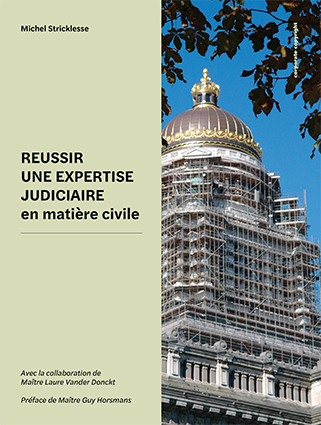
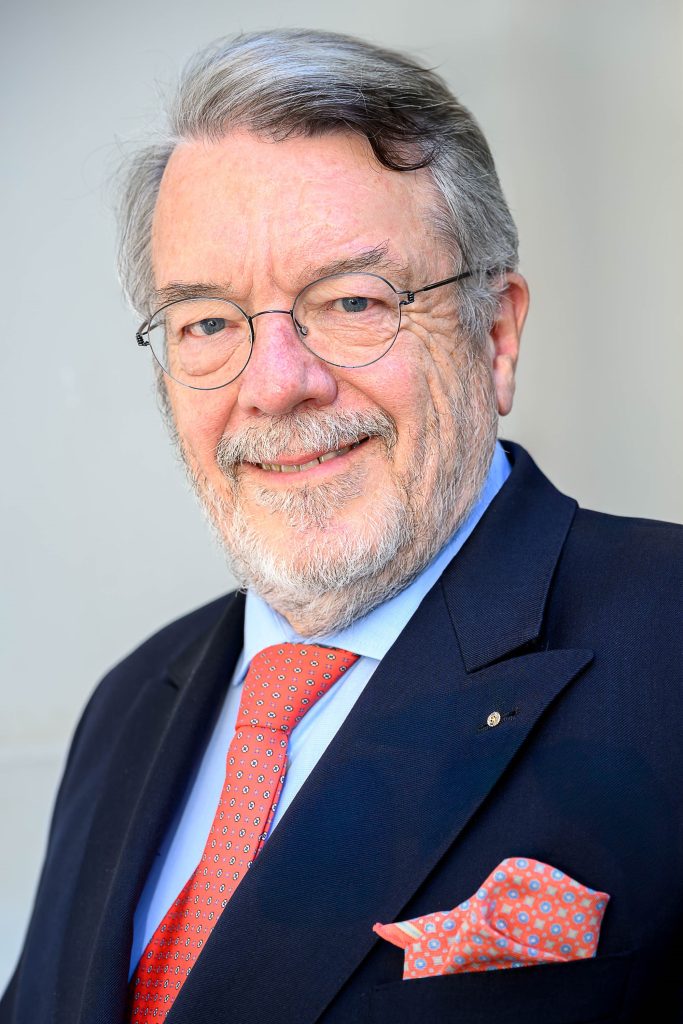
Who are you, Mr Stricklesse?
As luck would have it, one of my first assignments as a building works coordinator, in my capacity as an architect, led me – through ignorance or a lack of experience – to fail to spot the presence of dry rot in the roof structure of a house. The seller wished to refurbish the house to attract potential buyers.
When the buyer undertook extensive renovation work, he discovered that several parts of the roof structure had been eaten away by dry rot. This led to legal proceedings in which I was sued by the seller; these events took place in the early 1980s, shortly after I had qualified as an architect.
Fortunately, at the conclusion of the expert assessment proceedings, I was cleared of all liability. However, as the defendant, I discovered the ups and downs of a legal process for which one can never be fully prepared and about which I knew very little.
This initial experience has led me to take a much more informed and cautious approach to every stage of any building project, whether it is a new build or a conversion.
What’s more, the fact that I am the grandson of a building contractor has always instilled in me a strong sense of the imperative need for work to be done properly and paid for at a fair price. Simply because it represents a considerable expense, just like any property investment.
Twenty years later, despite my expertise in forensic assessment, I was once again named as a defendant in legal proceedings following the installation of a guardrail that did not comply with my specifications. Due to particular circumstances, it was no longer possible to refuse this installation, but it was too late – the damage had already been done.
That minor setback led to a second experience, the outcome of which was, however, less favourable than the first, as it had serious financial consequences.
What were the main difficulties you encountered?
The main difficulty lies in the fact that many contractors are unaware of the consequences of failing to comply with best practice and regulations, whether through negligence or greed; another difficulty is getting the client to accept the consequences of unforeseen circumstances.
The other main difficulty lies in the parties’ negligence or ignorance regarding the need to retain evidence of their decisions, orders or any information that might subsequently be used to substantiate their claims and demonstrate their good faith in legal proceedings.
All too often, the parties – under pressure from the service provider, who is keen to secure an order without unnecessary hassle – fail to set out in writing the terms that will bind them. Namely, the description of the services to be provided, their respective costs, the deadlines, and the terms of payment.
All these shortcomings act as obstacles when it comes to ensuring that the terms of a contract are fully and properly fulfilled; this shortcoming is particularly glaring in the construction industry, where shrewd salespeople or ‘pie-in-the-sky’ salesmen take advantage of clients’ ignorance or impatience.
What are you most proud of?
The reliability of the cost estimate for a major urban regeneration project, comprising the creation of a public park, a crèche, and 40 new homes, estimated at 200,000,000 BEF, proved to be perfectly accurate to within 0.25 per cent. This was despite numerous unforeseen circumstances and the commissioning of additional works.
Another source of pride is having been able, on numerous occasions, to reconcile the parties, sometimes even as early as the initial meeting to set up the expert assessment.
Why this book?
After a professional career spanning more than fifty years, I felt it was necessary to share both the positive and negative aspects of my experience. This is to help inform those new to the field and to introduce this process to anyone who might be interested in pursuing a career in forensic expertise.
This book is also intended for lawyers and judges, as many of them are unaware of the hidden side of expert reports or underestimate the difficulties faced by experts. The isolation they so often experience when confronted with the vagaries of legal proceedings and the anxiety of a blank page when it comes to answering the court’s questions.
What message would you like to convey to young experts?
It is essential that young experts are aware that, despite the difficulties of the task and the uncertainties of the proceedings, a carefully drafted expert report, containing precise responses to the court’s requirements, is a crucial piece of evidence for the claimant. When they need to provide evidence detailing poor workmanship, delays in supply, construction defects or errors in invoicing.
What advice would you give to architectural experts?
Like all court-appointed experts, architects must demonstrate humility, which means they must refrain from making judgemental statements regarding whether a building is aesthetically pleasing or not, or regarding any potential design flaws… The role of an expert witness is not to pass judgement on individuals at the expense of an objective assessment of the shortcomings that form the basis of the dispute under investigation during a court-appointed assignment.
Another recommendation is to try to gain experience from a project carried out under a public contract, as managing such a project requires extreme administrative rigour. This includes the drafting of the tender specifications right through to the final acceptance of the works.
Indeed, this burdensome administrative process, regardless of the financial stakes, is an experience unlike any other, as the success of the project demands a level of rigour that is all too often lacking in private-sector contracts.
Does the property sector particularly highlight the challenges and difficulties of court-appointed expert assessments?
Without knowledge of the specific characteristics of expert assessments carried out in other fields, such as healthcare, forgery or finance, it is obviously presumptuous to provide an objective and comprehensive answer to such a question.
However, there is no doubt that, because of the three parties involved in the construction process – namely the client, the architect, and the contractor – the construction industry is a unique sector, unlike others where there are often only two parties involved: a single claimant and a single defendant.
The property sector is made even more complex by the fact that the three parties mentioned above can take the form of multiple entities, such as co-owners in the case of the client, subcontractors of the contractor, or co-contractors of the architect for structural engineering, HVAC and other inspection firms.
This complexity requires the court-appointed architectural expert to have a thorough understanding of, or at the very least, an awareness of these specific characteristics, which are not necessarily found elsewhere.
How should the expert position themselves at the intersection of technical analysis and legal reasoning, as encapsulated by the phrase ‘give me the facts, and I will give you the law’?
This wording does not imply that the expert must possess dual expertise; however, it does imply that they must provide an opinion that includes the necessary evidence, set out with the requisite clarity and precision so that the judge may base their judgement on the account or description of the facts that the expert has established during the adversarial proceedings they have conducted throughout the course of their judicial assignment.
To carry out this task, the court-appointed expert will bear in mind the need to draw up a report explaining in detail the relationship between the cause and its effects, that is to say, the causal link between a fault and the resulting damage, the latter obviously comprising the faults and defects alleged by the claimant.
How do French practices currently influence Belgian judicial expertise?
Given that the Belgian and French codes of civil procedure have their origins in the Code Napoléon, enacted in 1804; that the working language of the courts in both countries is the same; and that, generally speaking, societal trends that emerge in Paris subsequently appear in Belgium, and that the French courts handle a very large number of disputes, there is no doubt that this heralds a shift in Belgian judicial practices.
Consequently, to ensure that French legal experts scrupulously keep pace with the constantly evolving rules of procedure – whether administrative or judicial – it is necessary to organise symposia and other conferences that provide the essential and compulsory continuing professional development. Consequently, learning about more structured and demanding practices can only be beneficial.
The pioneering nature of the French judicial system is, moreover, demonstrated by the fact that it was not until 2017 that a register of court-appointed experts (RNEJ) was established in Belgium, whereas such a register had been in place in France since 1971.
Given that the French judicial system will, sooner or later, be influenced by its Belgian counterpart, it is therefore of the utmost importance to identify innovative and unconventional practices in Belgium to optimise the use of expert evidence. Belgian experts are, in fact, unfortunately all too often left to their own devices due to the fledgling state of continuing professional development.
Fortunately, this lack of preparation among Belgian court-appointed experts has, in recent years, been remedied by training courses such as those provided by the ABEX Academy and various universities. Unfortunately, these courses do not include other stakeholders in the court-appointed expert assessment process, such as judges and solicitors.
On the other hand, whilst the court-appointed experts have been sworn in before the president of one of Belgium’s five courts of appeal, no association has yet been set up around these presidents, as is the practice in France.
Such groupings centred on a court of appeal are conducive to the development of contacts and interprofessional relationships, as is the case with the 37 courts of appeal across France.
How can we overcome communication difficulties and improve cooperation between judges, lawyers, and experts?
Holding annual meetings or conferences to which the various stakeholders are invited is the best way for those involved in the justice system to meet, get to know one another better, improve expert practice and foster a better understanding with judges and lawyers.
However, the small size of the judicial districts and current Belgian practices pose a challenge to such groupings. Furthermore, Belgian experts are reluctant to travel, whereas their French counterparts readily travel several hundred kilometres to attend conferences, trade fairs and the like…
It is, however, clear that a single successful initiative is enough to bring about a change in habits.
What mistakes do you see in expert practice, and how can they be avoided?
Due to a lack of training, many Belgian experts are still not sufficiently aware of the need for rigour and tried-and-tested methodology, nor of the danger that a lack of command of the written word poses to the drafting of clear, lucid, precise and unambiguous opinions.
Unfortunately, good intentions cannot make up for the lack of preparation for presumptuous and pedantic experts.
In your opinion, what are the main challenges that forensic expertise will face in the coming years?
It is clear that the idea of using AI to manage expert reports or to help speed up their processing by experts or the courts is nothing but a farce.
Indeed, the AI’s idle and pointless verbiage will never replace a clear, concise and explicit explanation of the causal link between a fault and the damage. On the contrary, the AI will add to the confusion, which will always be to the detriment of the claimants.
Admittedly, in certain areas involving the analysis of facts or recurring failures, AI will make it possible to identify similarities and any instances of similar situations; it will still be up to the expert to draw conclusions from these to provide a relevant opinion.
What are your views on how European legislation on expert evidence should develop?
It seems unrealistic to seek to legislate at European level on all matters relating to forensic expertise.
Indeed, apart from cross-border fields such as chemistry, medicine, watchmaking, counterfeiting, etc., many sectors, such as the construction industry, are still governed by national practices or regulations. Consequently, legislating in this area at European level seems utopian.
Conversely, standardising the designation of experts, procedures and expert accreditations across Europe would enable Article 6 of the ECHR to be applied uniformly for all European citizens.
What is your advice for a successful court-ordered expert assessment?
Have at least ten years’ hands-on experience in the field of expertise in which the professional acts as an expert witness before the courts.
Having been a party to a legal dispute oneself is an asset, as it provides an inside’s view of the attitudes a court-appointed expert should adopt – or, conversely, avoid.
Finally, it is, of course, essential to be able to draft a report that is clear and concise, and which clearly sets out, in simple terms, the link between the fault and the damage.
Michel STRICKLESSE, Architect Emeritus
Court-appointed expert (No. 2309711) at the Brussels Court of Appeal
Accredited mediator (No. 814)
Attached to this page are two articles by Michel Stricklesse which supplement his recommendations on the practice of expert assessment:
- one on the duties of a court-appointed expert;
- the other on the importance of taking note of judgements handed down after the final report, reminding us of Article 983 of the Belgian Code of Civil Procedure, which has no equivalent in French law today and provides for a copy of the final judgement to be sent to the expert.


 Français