



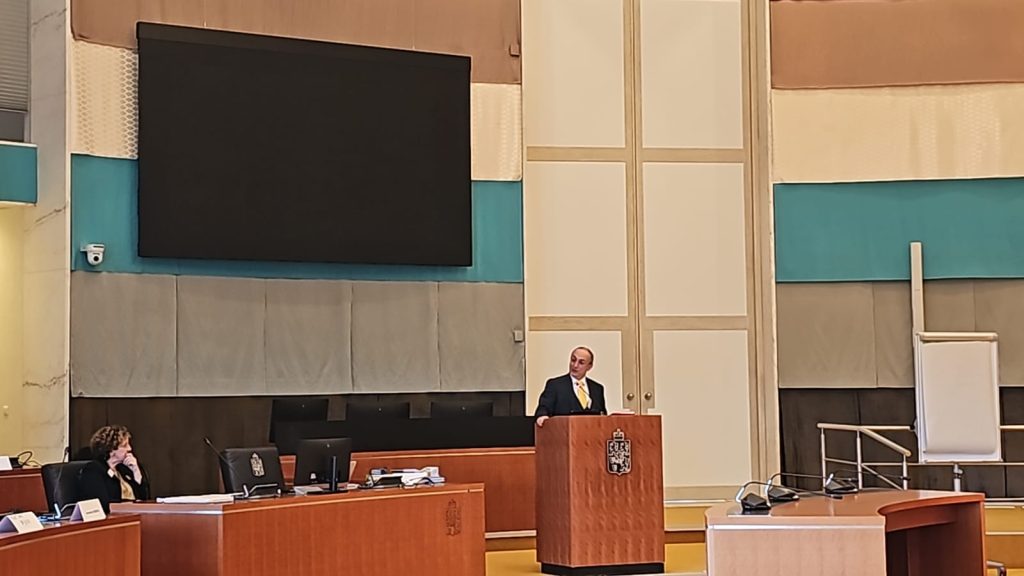
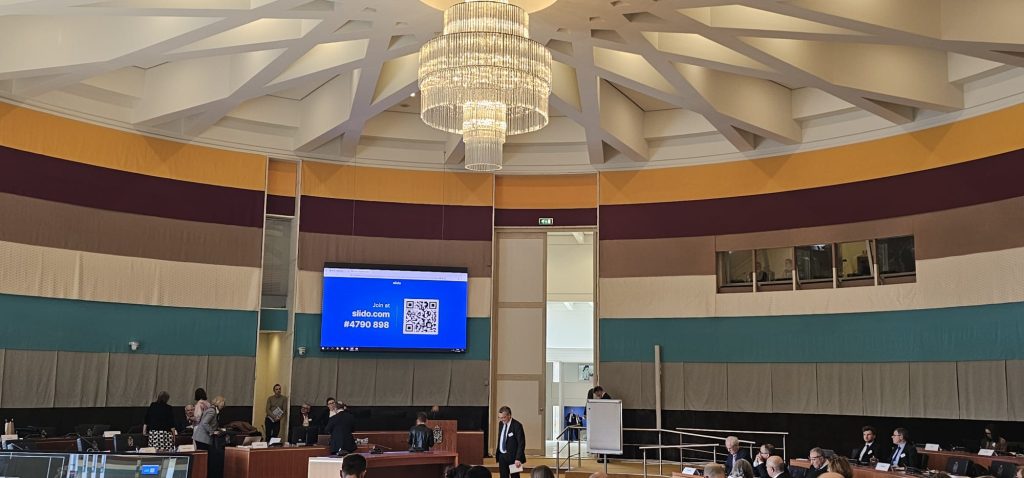
On 30, 31 March and 1 April 2026, Maastricht (Netherlands) hosted a major event in European judicial cooperation, marked by the joint holding of the first meeting of the CEPEJ-GT-EFF working group and the 19th meeting of the CEPEJ Network of Reference Courts.
The EEEI was represented there by Jean-Raymond Lemaire.
These meetings, held in particular at the Limburg Courthouse and at the provincial government offices, brought together numerous stakeholders in the European justice system around a common goal: to improve the efficiency and quality of the functioning of the courts in Europe.
A working group dedicated to the efficiency of legal proceedings
The newly established CEPEJ-GT-EFF group held its first meeting on 30 March and 1 April 2026. Its mandate is ambitious: to develop tools and methods designed to enhance the efficiency of judicial systems for the benefit of those involved in legal proceedings.
His work focuses in particular on:
- the administration of the courts;
- the organisation and training of the judiciary;
- measuring workload;
- the reduction of arrears;
- the enforcement of court orders.
During the meeting, discussions focused on several major projects. In particular, the discussions centred on:
- a study on reducing the length of civil proceedings;
- the introduction of systems for measuring workload;
- improving the tools for enforcing court decisions, with the involvement of the International Union of Judicial Officers (UIHJ).
Members also made progress on the development of new tools, such as checklists for modern court management and training programmes in judicial management.
Thematic workshops at the heart of current priorities
The meeting of the Network of Referral Courts was structured around six thematic workshops reflecting the main current issues:
- automation of judicial processes;
- environmental sustainability of the courts;
- modern court management;
- indicators of the quality of justice;
- training in judicial management;
- priorities for the next CEPEJ evaluation cycle (2027).
This work has enabled us to gather feedback from practitioners and identify areas for improvement based directly on real-world experience.
Discussions also focused on the digitalisation of the courts, the integration of artificial intelligence into judicial practice, and the skills required for effective management in the digital age.
A space for discussion and collaborative development
The main aim of this meeting was twofold:
- to inform the pilot courts about the tools recently developed by the CEPEJ;
- gather their feedback to improve the work currently underway.
The day was structured around a plenary session and several parallel workshops, encouraging discussion among professionals.
Towards a more efficient and modern justice system
The work carried out in Maastricht illustrates the drive launched by the CEPEJ to modernise the European justice system.
These priorities – digitalisation, improved court administration and enhanced training – address the specific expectations of the public:
- faster justice;
- a more accessible justice system;
- a justice system better adapted to technological developments.
The meeting concluded with a presentation of future priorities, as well as a focus on flagship initiatives, such as the Crystal Scales of Justice Award, which recognises best judicial practices across Europe.
The EEEI would like to express its sincere thanks to the CEPEJ for its hospitality and for the interest shown in its Think Tank during these proceedings.


 Français