



Lawyers, experts of the parties and technical experts from genesis…to apocalypse
This article is an extract from the speech given by Giovanni Rosotto, architect, at the conference organised by the Turin Bar Association on 20 June 2024.
Presentations of some cases with evidence of errors in the definition of the questions posed to the Court Technician as well as methodologies, from which emerges the importance of the preparation of consultants in both technical and legal procedure fields.
Case 1:
New fact during ATP: methodological error by the court expert
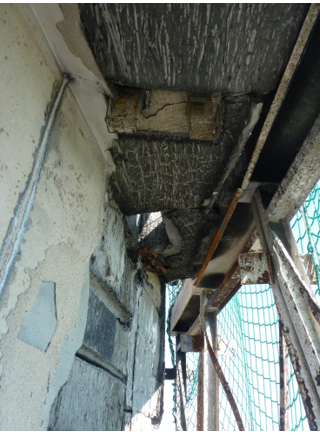
Construction of a reinforced concrete tank for the storage and pre-treatment of wastewater from the processing of a factory.
Less than 2 years after completion, the tank undergoes deformations and consequent damage.
During the investigation, the court-appointed expert, instead of requiring the parties to provide a technical definition of their grievances, decided to attribute responsibility for the damage to all the parties involved in the construction of the tank.
It was not until the second instance case, and the appointment of a new court-appointed expert witness, that it was possible to verify that the causes of the damage were attributable to the client’s unlawful deposit of waste and, therefore, the only party that had been excluded from the attribution of responsibility in the first instance was defined as exclusively responsible.
Case 2:
The questions put to the court’s experts must enable the expert to make explicit the elements necessary for the judge to make the liability assessments, and therefore the following examples of questions are correct:
- ‘With reference to the faults and defects of the heating plant already found in the report filed in the preventive technical assessment proceedings, taking into account the further documentation filed in the course of the proceedings concerning the contractual relations between xxxxx and yyyyyy (in particular doc. 1 and 2 of party xxxxx and doc. 2 and 3 of party yyyyy), provide any further element useful for the purposes of ascertaining their respective responsibilities’;
- ‘in the determination of the causes and/or concurrent causes of the harmful phenomena, express its opinion, where possible, on the attribution to the respondents (or to part of them) of concurrent liability, providing the technical indications necessary for the graduation of their respective faults (to this end, take into consideration the defenses put forward by the respondents in their respective pleadings)’.
The rule of limiting to the expert only the definition of the technical fact, leaving to the Guidice that of the liability profile, applies at any level of judgement.
It follows that the expert must verify causes, concurrences, effects and causal link, making the technical fact clear to the magistrate and lawyers who are not technicians.
Case 3:
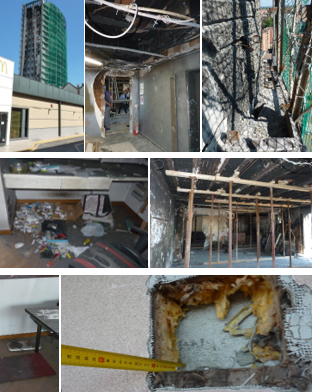
On 29 August 2021 a fire destroyed an iconic skyscraper in the city of Milan built in the late 1990s.
The litigation following the fire can be summarized by the following data:
- 40 parties in the civil case, 164 indictments in the criminal case;
- About €. 100,000,000.00 in direct material damage and about €. 50,000,000.00 in indirect material damage;
- Ministerial Decree 14 January 2008 (Approval of the new technical standards for constructions) issued by the MINISTER OF INFRASTRUCTURE in agreement with the MINISTER OF THE INTERIOR and the HEAD OF THE DEPARTMENT OF CIVIL PROTECTION – Published in the Official Gazette no. 29 of 04/02/2008, and in particular article 3.6.1.2 (concerning performance requirements in order to limit the risks arising from fires)
- Legislative Decree no. 206 of 6 September 2005 (Consumer Code, in particular with regard to product safety)’.
- report the outcome of the tests to which it will submit the samples of the ACM LARSON PE panels (taken from among those surviving from the façade of the TORRE DEI MORO building), taking into account the concrete use that was made of said panels for that construction and considering, in particular, the lack of adherence to the substrate and in particular the outcome of the following tests (subject to agreement with the judge as to the choice of laboratory)
- (a) provided for in standard EN 13823 (SBI) for materials intended for external use in facades,
- (b) required by EN 11925-2 for materials intended for external use in façades,
- (c) required by EN 12925-2.
The formation of applications with incorrect references, as well as the wrong approach to technical investigations in the criminal field, has contributed to incorrect press reports such as the following:
‘The panels of the ‘sail’ cladding of the Moro Tower, an 18-storey skyscraper that caught fire like a torch on 29 August in Milan, were supplied by Alucoil, a Spanish manufacturer, to Zambonini, which was in charge of the façades on behalf of Moro Costruzioni, ‘before approval was issued by the Ministry of the Interior’ in 2010. And the ‘installation’ of the panels, which were made of ‘material’ that contributed to the ‘propagation’ of the fire, took place ‘in a manner that was not consistent’ with what was ‘envisaged by the test certificate’ and the ‘homologation’. This can be read in a report dated 21 September by investigators from the Milan fire brigade, in the files of the investigation by deputy Tiziana Siciliano and public prosecutor Marina Petruzzella and filed with the re-examination, to which some defences have appealed on the seizure of documents and material in the searches’.
From: https://tg24.sky.it/milano/2021/11/25/incendio-torre-moro-milano.
The correct definition of the normative reference identified in the Decree of the Ministry of the Interior of 26 June 1984 Classification of reaction to fire and homologation of materials for the purposes of fire prevention has allowed the company producing the panels to be relieved of all responsibility.
I believe that the cases represented have highlighted the importance of a coordinated and collaborative activity of all the figures taking part in the judgement.


 Français