



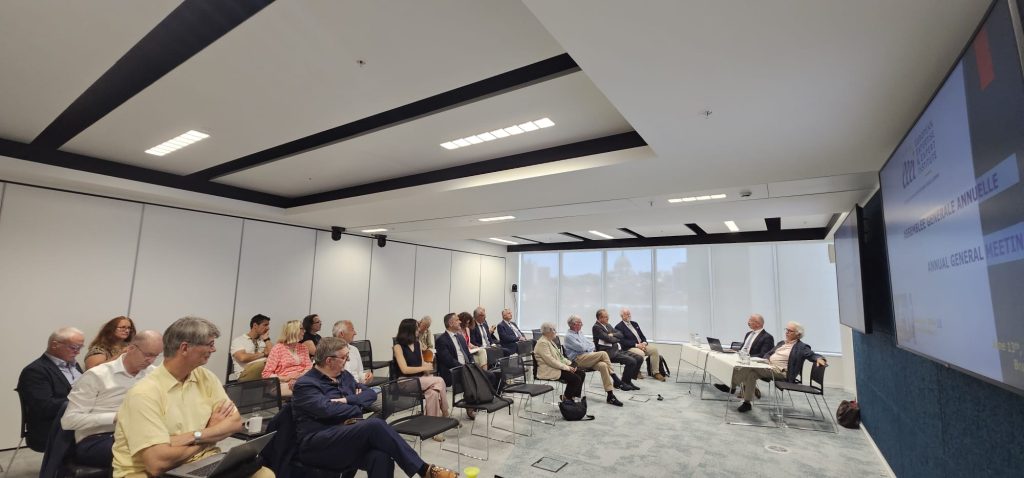
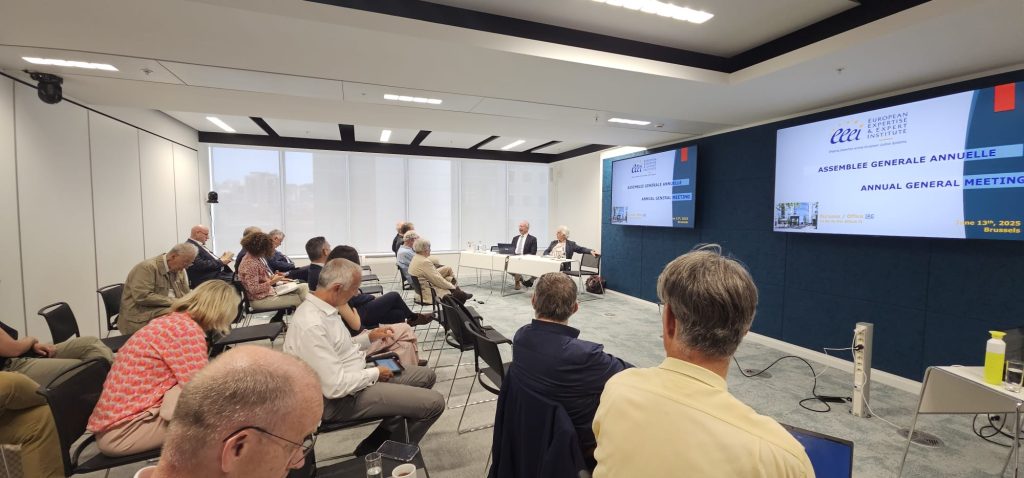
On June 13, 2025, the European Institute of Expertise and the Expert (EEEI) held its annual General Assembly in Brussels, at the premises of the Institute of Company Auditors (IRE), located at 19 Boulevard du Roi Albert II, 1210 Brussels. Participants were welcomed from 12:00 p.m. with a friendly cocktail, followed by the working session from 2:00 p.m. to 4:00 p.m. This key institutional event provided an opportunity to review activities, present ongoing and upcoming European projects, discuss governance issues, award the 2024 EEEI Prize, and lay the foundations for the “EEEI 2.0” strategy.
Focus on the IRE: A Key Player in Regulation and Accounting Expertise
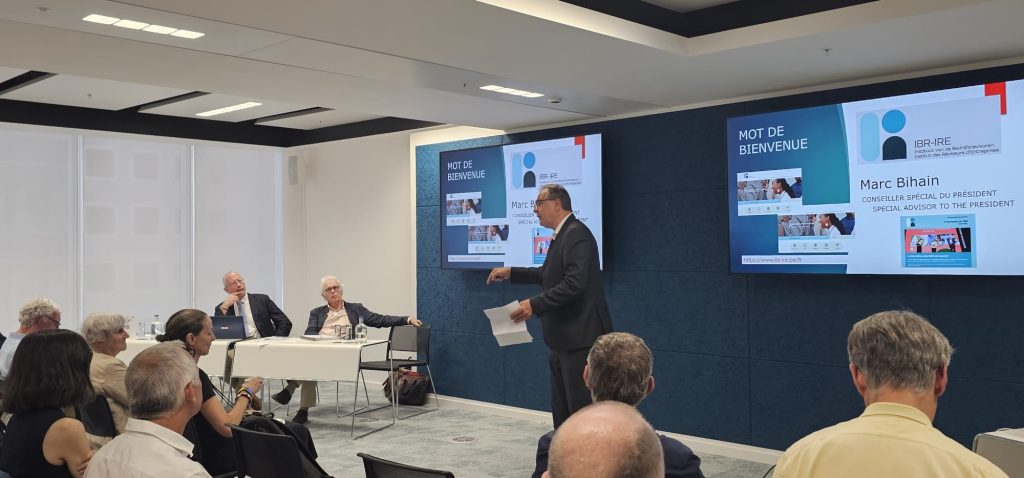
The session was introduced by Marc Bihain, Secretary General of the IRE, who delivered a rich and engaging presentation on the Institute’s missions, the sector’s challenges, and future prospects. Although he has stepped down from operational duties, he remains deeply involved as an advisor to the President.
The IRE, which operates alongside an institute dedicated to accountants, plays a major role in supporting businesses. It serves nearly 29,000 entities, generating an estimated economic value of €7 billion and accounting for 63% of employment in the sector. The Institute also trains 574 students, 30% of whom are women, highlighting the profession’s challenges in attracting young talent.
An audit market under pressure: highly competitive and underpriced, with €4.5 billion in revenues, 90% of which are concentrated among the 20 largest firms. Consolidation operations are underway to support technological investments.
Marc Bihain highlighted several key points:
- CSRD (Corporate Sustainability Reporting Directive) and the public mission of auditors,
- Training, attractiveness and legal framework,
- Technology, AI, and standardisation.
In conclusion, Marc Bihain emphasized the importance of safeguarding the profession’s reputation, particularly in relation to the judiciary, and strengthening interprofessional cooperation with judges, lawyers, and experts. He expressed a willingness to work collectively on regulatory, technological, and training challenges.
EEEI at the Heart of Judicial Innovation: European Projects and Enhanced Cooperation
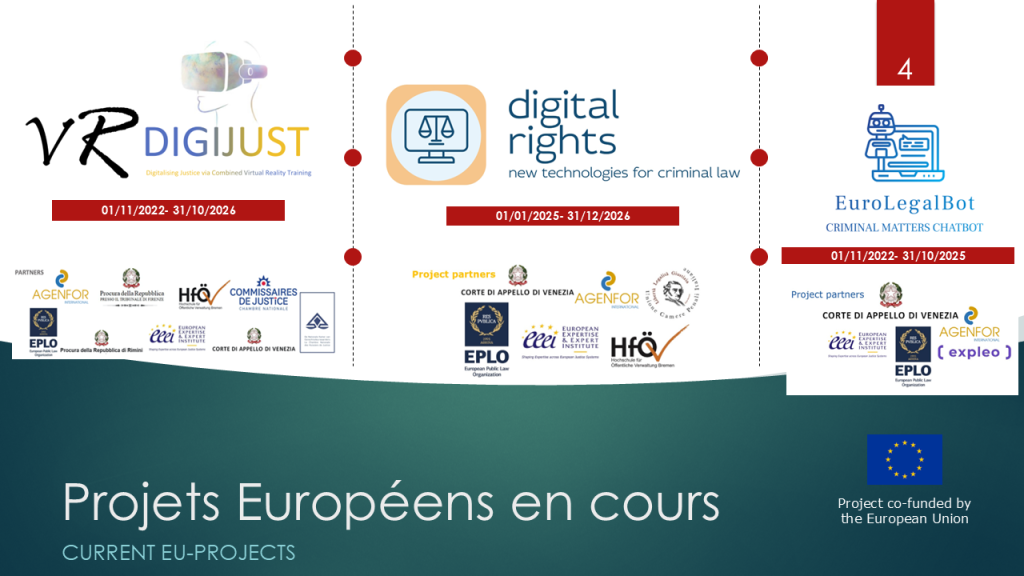
EEEI continues its commitment to several major European projects: VR DIGIJUST, Digital Rights, EuroLegalBot, and is preparing new initiatives such as e-REX (European register of experts) and EXPERT-LEX (combating discrimination). These projects aim to strengthen judicial cooperation, integrate AI into expert processes, and improve the sustainability of deliverables.
EEEI: Financial Balance and Renewed Governance
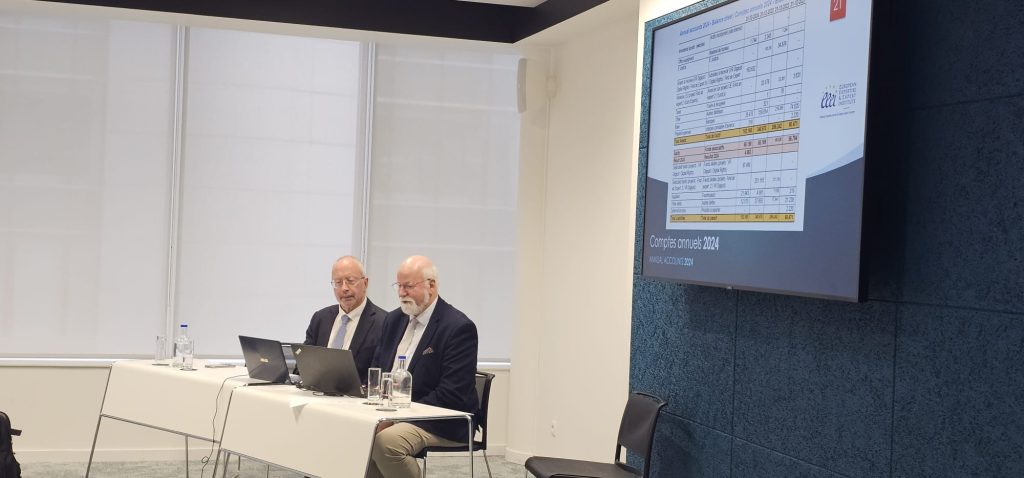
The 2024 accounts were approved, showing a profit. EEEI aims to diversify its funding sources and strengthen its cash flow in light of delays in receiving European grants.
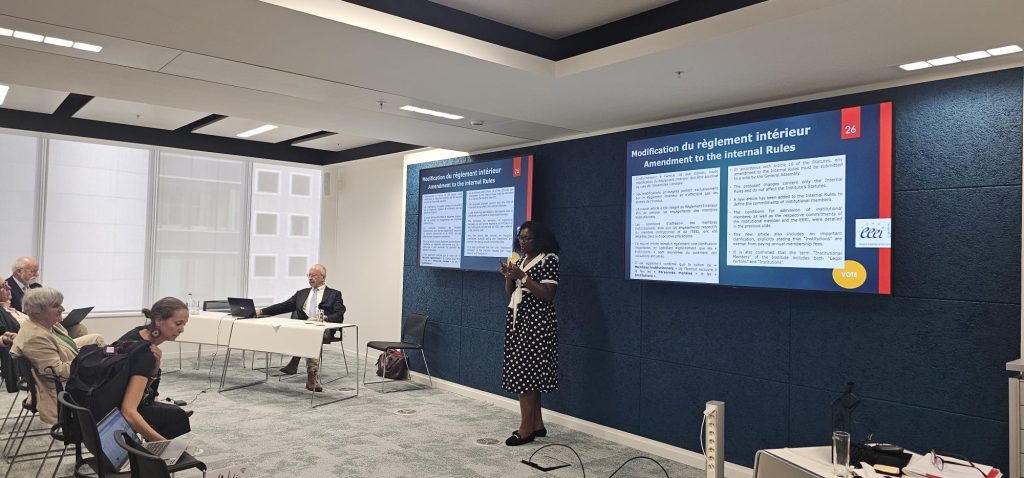
On the governance front, the Assembly confirmed the integration of 14 new individual members, bringing the total number of active members to over 120. In addition, 6 members were elected to the Executive Committee (COMEX). The internal regulations were amended to formalize the status of institutional members, with reciprocal commitments over a three-year period.
Benoît de Clerck announced that he would not be renewing his mandate as co-president of the Institute. Nevertheless, he remains fully committed and will continue to collaborate with EEEI within the framework of the ongoing EuroLegalBot project.
Nice Symposium: Expertise and Resilience in the Face of Terrorism
The Assembly also presented the organization of the interdisciplinary symposium in Nice, scheduled for October 24–25, 2025, dedicated to the care of victims of terrorist acts in Europe. The event will bring together doctors, experts, judges, and associations for practical workshops and experience-sharing sessions, with around 25 speakers expected.
A Strategy to Strengthen the Institute
During the 2025 General Assembly, the European Institute of Expertise and the Expert (EEEI) unveiled its new development strategy, called “EEEI 2.0,” aimed at consolidating its foundations and preparing for the future.
A New Partnership Model
EEEI is proposing the implementation of an innovative partnership model with institutional members, based on a mutual three-year commitment. This approach aims to create lasting relationships and strengthen cooperation between the Institute and its partners.
Three Priority Areas
The “EEEI 2.0” strategy is built on strengthening the structure in three key areas:
- Administration: improving internal organization and project management
- Communication: increasing the Institute’s visibility and showcasing its activities
- Research: supporting innovation and scientific output in the field of judicial expertise
Regulatory Evolution
To support this transformation, the internal regulations will be amended to incorporate these new commitments and clarify the definition of institutional members. This development marks an important step in structuring governance and ensuring the sustainability of European projects.
EEEI Awards 2024: Promoting Reflection and Innovation in Judicial Expertise
As a reminder, the EEEI Awards 2024, an honorary distinction awarded by its independent scientific committee, recognises outstanding work in the field of forensic science.
Two honorary awards for major contributions
In 2024, two Awards were presented, without financial endowment, but with significant visibility and recognition within the scientific and professional community.
The prize in the Scientific Article category was awarded to Tatjana Zoroska Kamilovska and Tea Micevska.
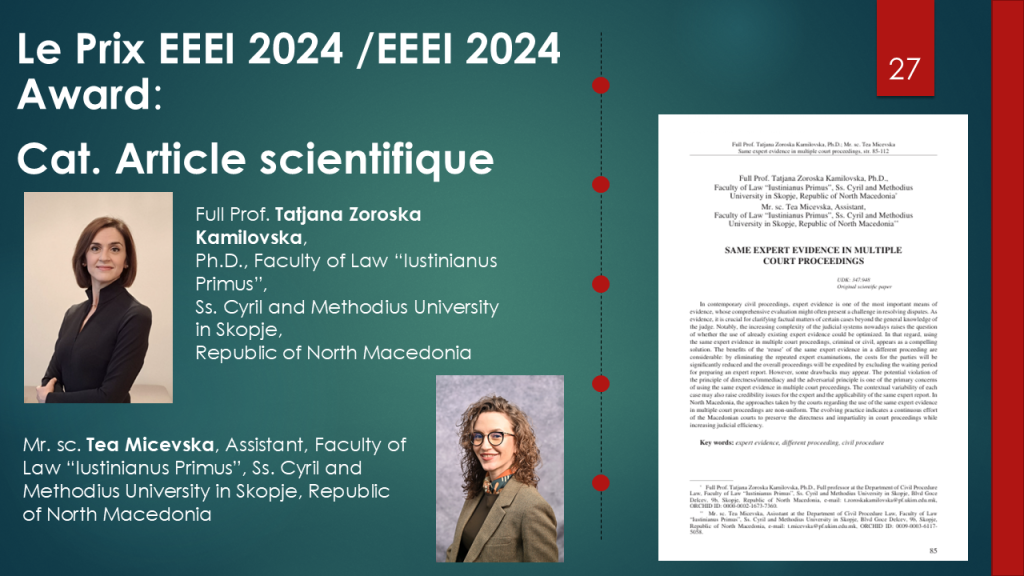
Recognized for an innovative article on the reuse of expert reports in multiple proceedings. Their work proposes explicit regulation to allow this practice while safeguarding procedural rights. Tatjana and Tea presented their conclusions and recommendations for North Macedonia online.
The award in the Collective Work category was presented to Christelle Cournil.
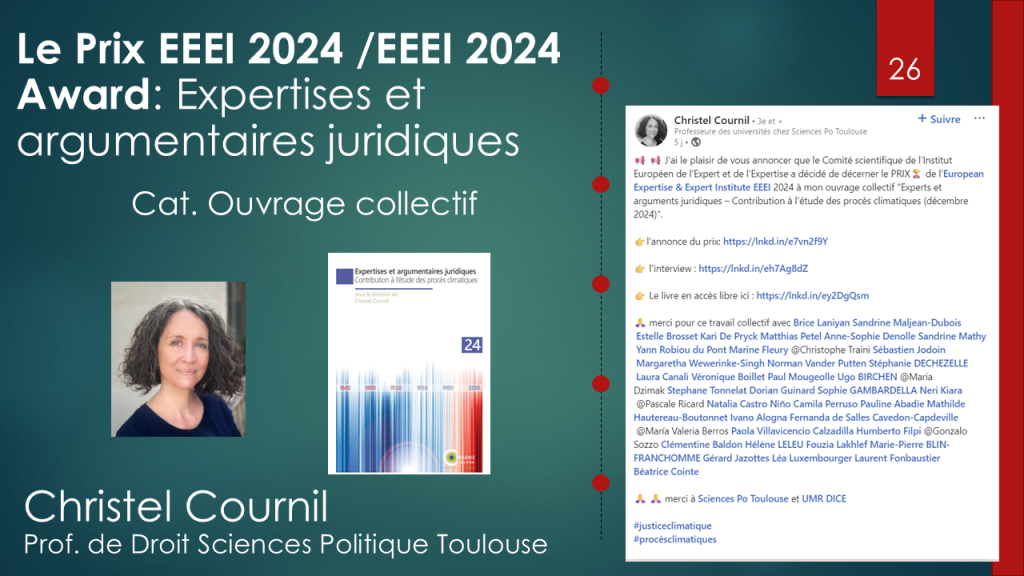
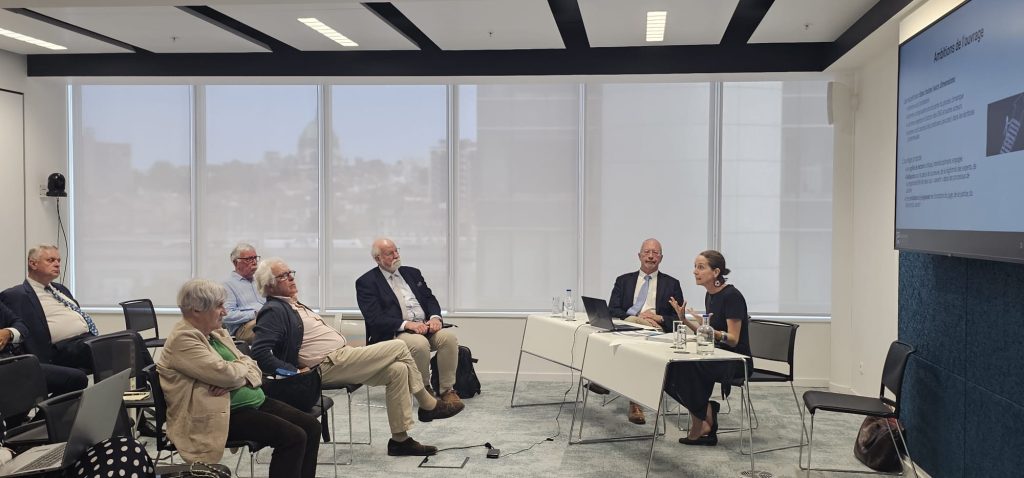
Recognized for a collective work on climate litigation and the role of expertise. The study maps practices, analyzes how expert opinions are produced, and explores their legal, social, and political implications. Christelle was present and outlined the main themes of the book.
The scientific committee, completely independent from the Institute’s governing bodies, praised the originality and practical relevance of the award-winning work:
- Efficiency gains through the reuse of expert reports
- The growing importance of scientific expertise in climate litigation
The presentations sparked numerous questions and discussions with the audience, particularly on the dissemination of the work, international comparisons, and practical implications.
Thanks to you, this Assembly was a highlight of collaboration, reflection, and great conviviality.
THANK YOU for your support!
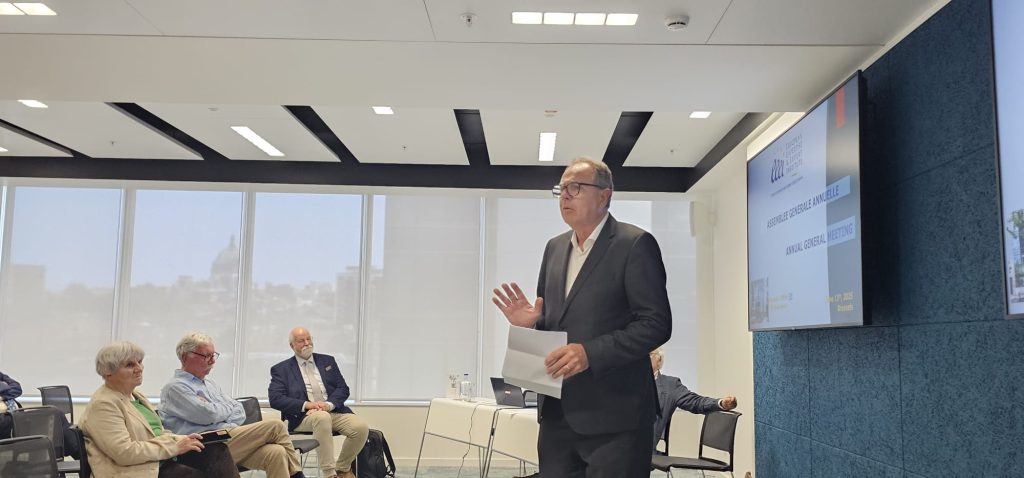
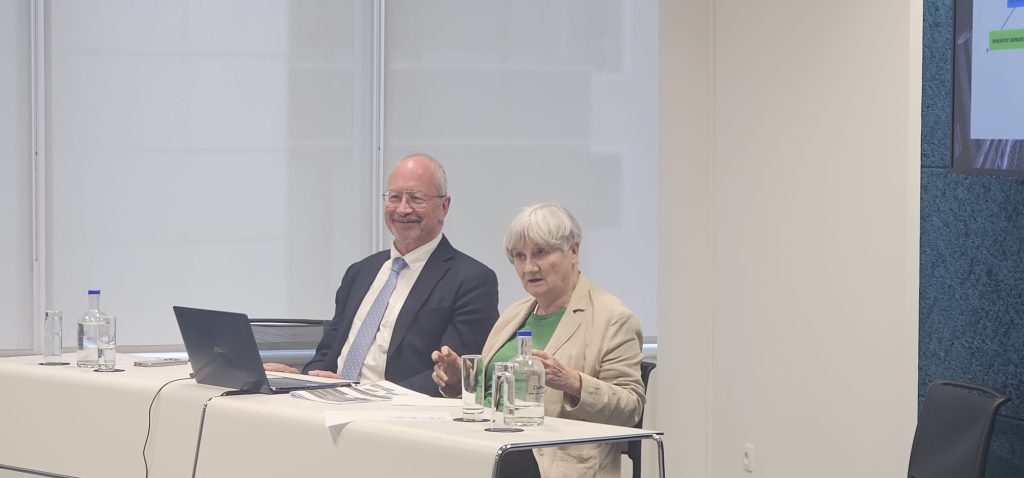
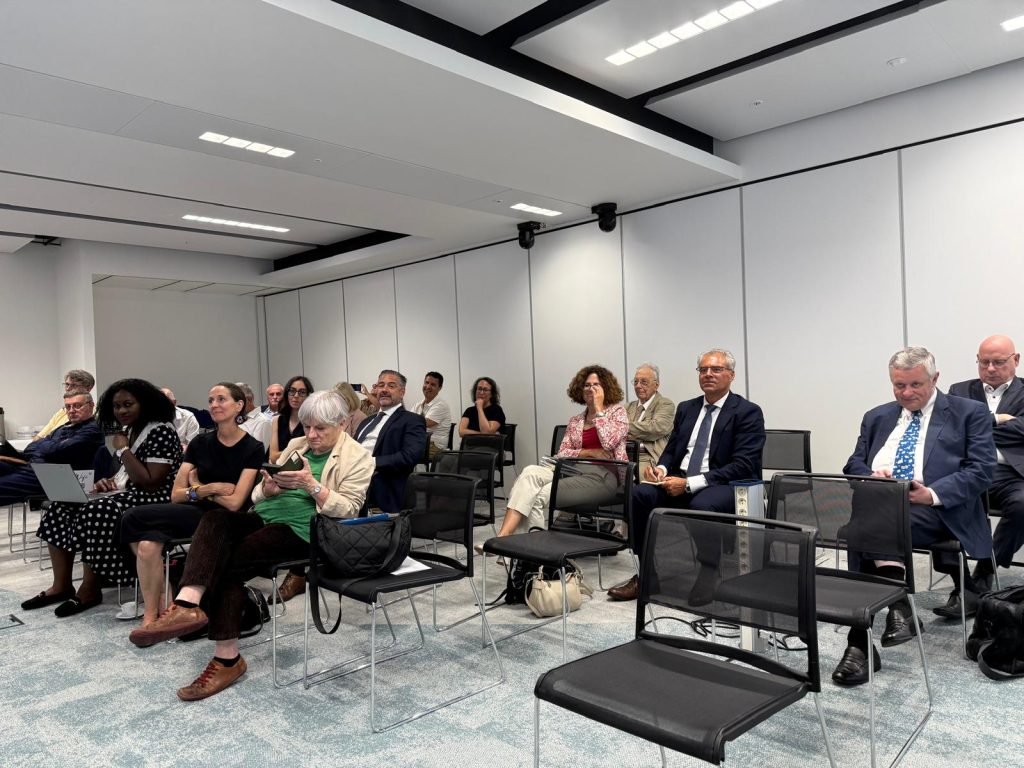
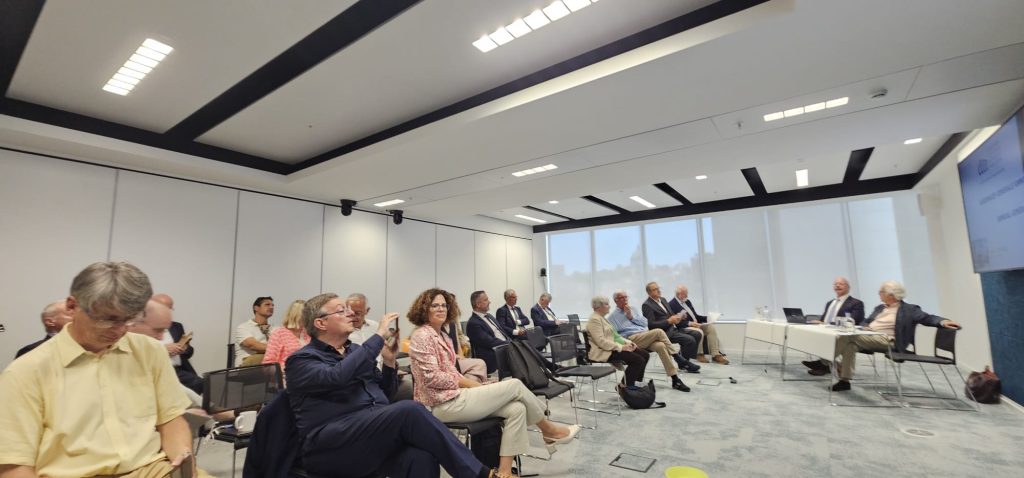
Photo gallery featuring speakers and participants




 Français