



Preamble
Our goal seems to have been achieved: to offer two days of discussions based on the conviction that anticipation, prevention and knowledge transfer are essential levers, drawing on the concrete experience of the speakers to promote better knowledge and understanding of trauma related to acts of terrorism, and thus contribute to the development of appropriate responses.
The consortium would like to extend its warmest thanks to the Dean of the Faculty of Law and Political Science, as well as to the staff who worked hard over the two days, all the speakers and participants who came from all over Europe, and the technicians, caterers and translators for their commitment and contribution to the success of the conference.
We would also like to thank our partners — SophiAssur, NeoTech Groupe Diot-Siaci, Revue Experts, and the Nice Tourist Office — for recognising these two days as a useful and promising initiative and placing their trust in us.
Special thanks go to Vice-Dean Ugo Bellagamba for his presentation during the lunch break in the Salle des Pas Perdus of the Faculty of Law and Political Science in Nice on Marc Chagall’s mosaic “The Message of Ulysses”. This cultural moment, both inspiring and unexpected, enriched the two days of discussions and was greatly appreciated by the participants.
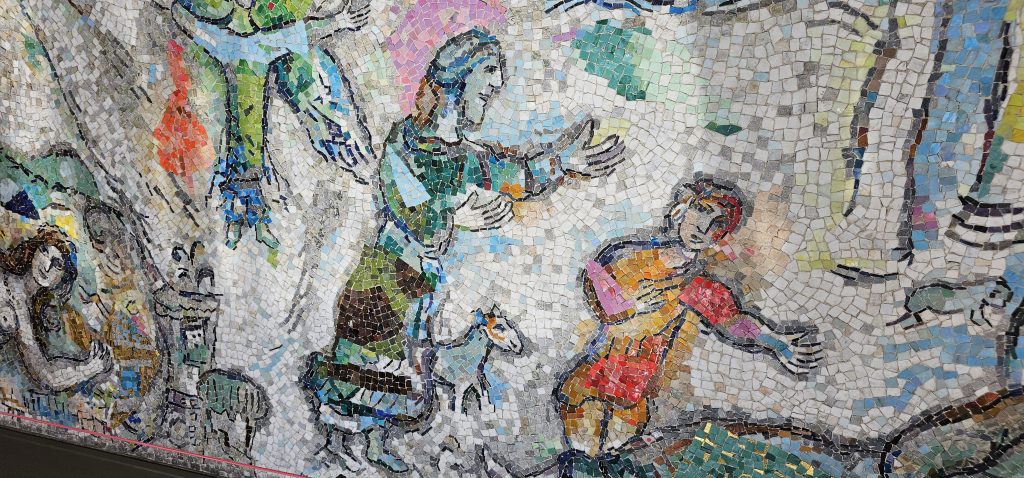
These two days were rich in testimonials, and the many messages we have received show that each of us has gained valuable insights from them.
Brief report
Interventions on the morning of 24 October
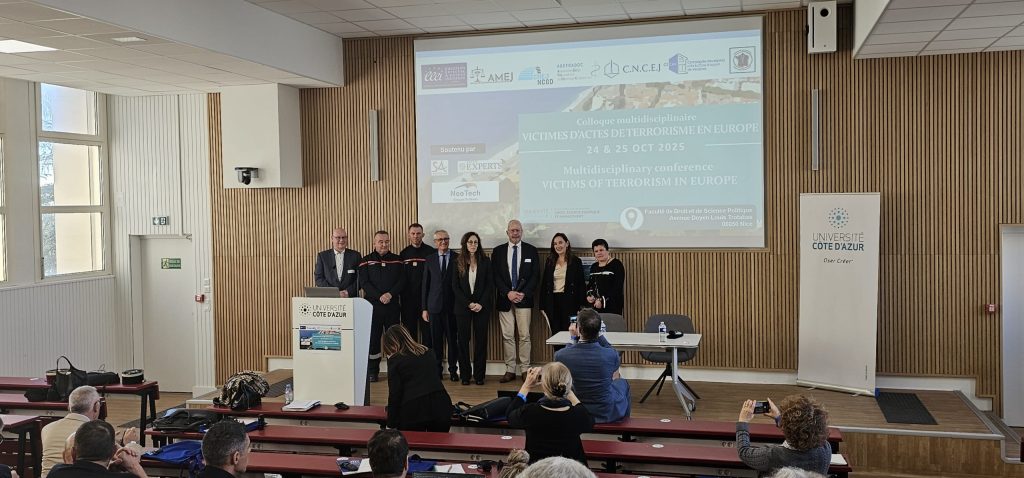
From left to right: Thierry Wanet, Lieutenant Colonel Riquier, Thomas Lanoux, Xavier Latour, Eva Mouial-Bassilana, Etienne Claes, Marie-Pierre Lazard, Nathalie Sillon
Marie-Pierre Lazard, councillor, sub-delegate to the Council for Family Rights and Responsibilities and the UNICEF Child-Friendly City Label, representing Nice City Council
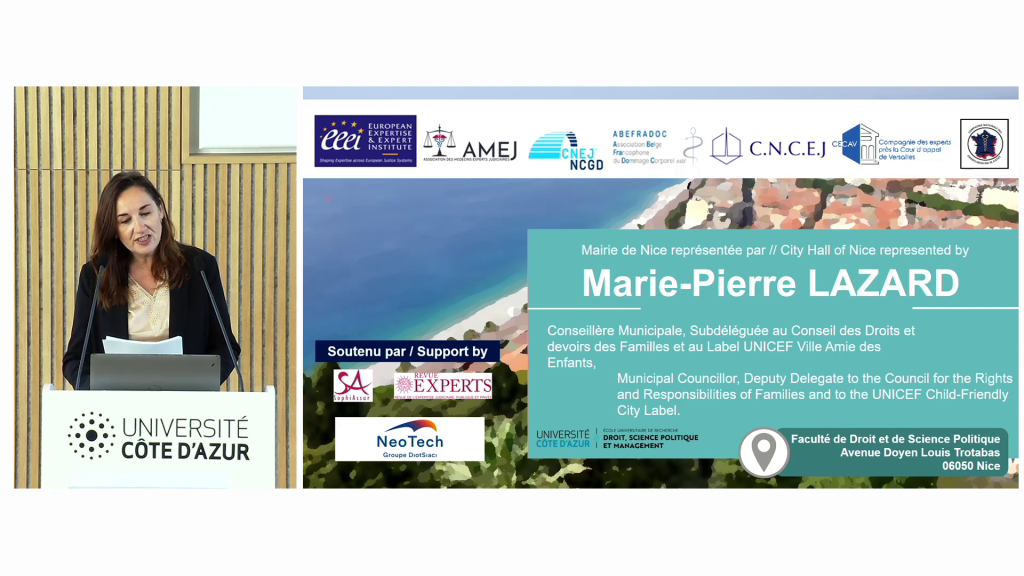
To begin the morning’s proceedings, Marie-Pierre Lazard spoke about the city of Nice’s involvement in helping victims since the 2016 attack, working closely with victims’ associations and families. She particularly emphasised the need for empathy, listening and understanding towards victims in the aftermath of the attack from magistrates and experts. She shared with us her experience of post-traumatic shock, which is particularly strong in children, regardless of their age.
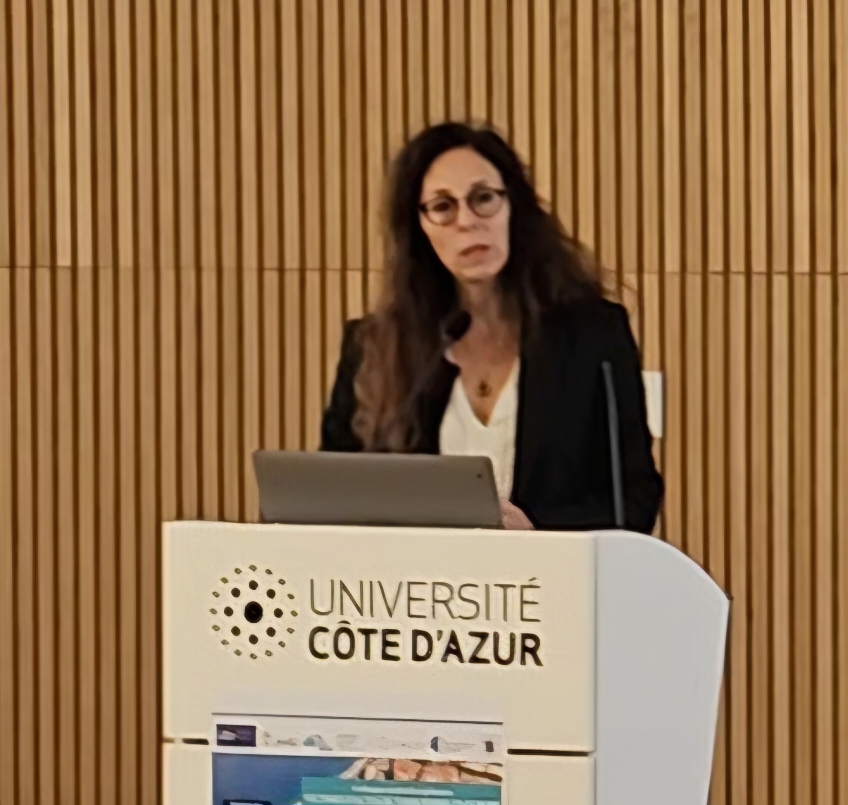
Eva Mouial-Bassilana, Dean of the Faculty of Law and Political Science of Nice
In her introductory remarks, Eva Mouial-Bassilana expressed her pride in hosting this European event at the faculty of which she is the dean. Because the issue of terrorism in Europe concerns us all and raises many questions, both for lawyers and for citizens as a whole. What is a victim? Who should be compensated and how? How can terrorism be prevented?
Etienne Claes, President of EEEI, thanks the speakers, participants, organisers and sponsors of the forum. After a brief presentation of EEEI, he emphasises that this conference is primarily for the victims of terrorism and proposes a minute’s silence for all victims of terrorism before continuing.
Xavier Latour, Université Côte d’Azur, speaking on the history and definition of terrorism
In his capacity as President of the French Association for Security and Defence Law, Xavier Latour shared his legal insights on the environment of terrorism. He traced the evolution of the organisation of those involved in combating and preventing terrorism, and the profound changes in the law in response to terrorism: the shifting boundary between prevention and repression, the use of surveillance technologies, and the balance between security and freedom.
Lieutenant Colonel Riquier – Lieutenant Colonel of the professional fire brigade within the Alpes-Maritimes Fire and Rescue Service (SDIS), whose actions, along with those of the SDIS firefighters, during the attack on 14 July 2016 on the Promenade des Anglais, helped to save as many people as possible.
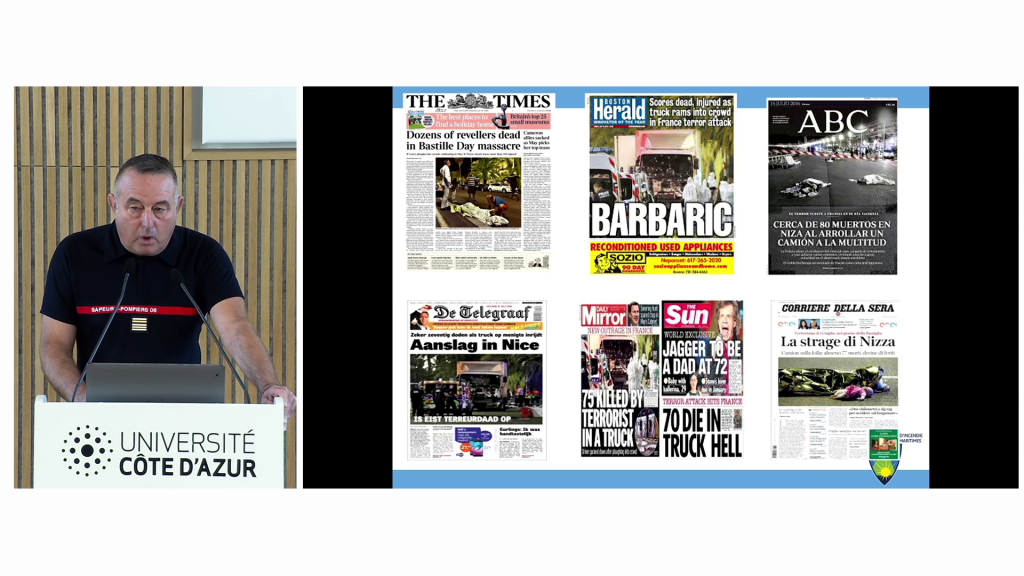
As commander of rescue operations during an extraordinary event, the attack on 14 July 2016, Lieutenant Colonel Riquier wanted to “share his experience with us and try to show us how this extraordinary operation had such a profound effect on both the responders and the victims. Indeed, the attack on 14 July 2016 will remain one of the interventions that marked his life as a firefighter and as a man.” He described the methodology from A to Z, the importance of traceability of operations, and the role of command that he played.
Javier Gomez Bermudez, magistrate (ES), expert in the field of terrorism, both Islamist and ETA, barrister in Madrid, gave us his testimony based on a whole series of points concerning victims, particularly the victims of 11 March 2014 in Madrid, Spain.
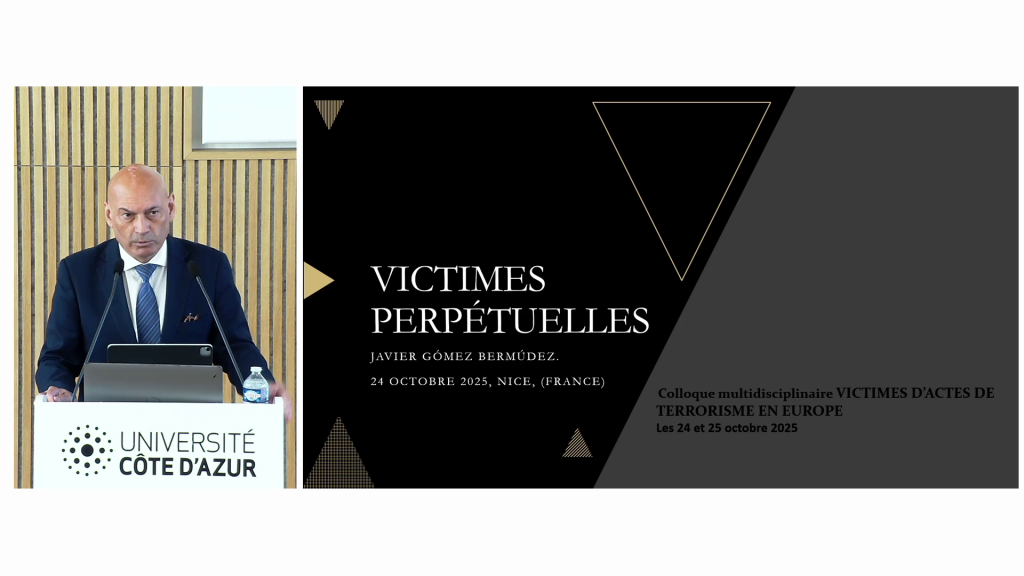
For Javier Gomez Bermudez, terrorism is a phenomenon of political violence, crimes whose main characteristic is precisely that they affect victims without targeting them specifically. The victim is merely an instrument, used to attack the powers that be in the hope of changing them, modifying them, replacing them with a social, political or religious structure that is the one sought by the terrorists.
The victims of terrorists are political victims. Modern terrorism does not discriminate between victims, so whatever the reason someone becomes a victim of terrorism, the state must be there to protect that person as much as possible. It is not enough to protect the victim; their status as a victim must also be recognised. They should not be asked to forget and fall into moral relativism. We cannot put victims and perpetrators on an equal footing because being a victim is a lifelong condition; you always remain a victim.
Thomas Lanoux, Chief Medical Officer of the Alpes-Maritimes Fire and Rescue Service, explained the role and organisation of an advanced medical post during the attacks.
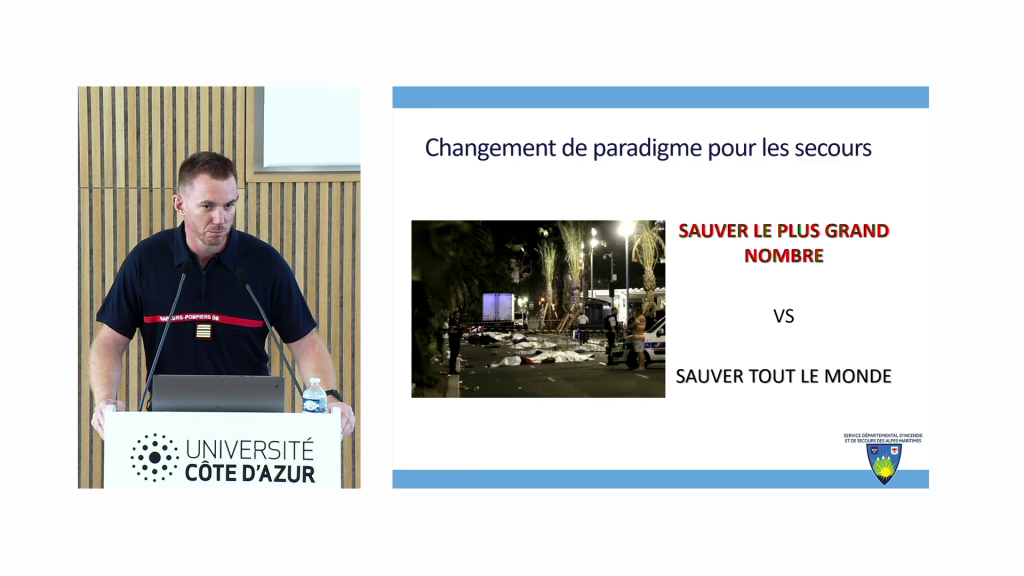
For a doctor, a medic, a first-aider, or a firefighter, when you take charge of a victim, the goal is to save them. However, when you have to deal with multiple victims, you have to triage them and the paradigm shifts. You try to save as many people as possible. We cannot save everyone, which is why we have to organise ourselves to save the victims who can be saved. So we will have to make choices and give up on treating certain victims. The Advanced Medical Post will serve as a buffer zone, a waiting area for treatment. The role of the AMP is to create this transition zone, which allows us to try to save as many people as possible.
The advanced medical post is a central entity of the ORSEC-NOVI system. It requires smooth organisation and operation, otherwise it will not work. The choice of location is essential. It must be agreed upon by the rescue operations commander and the medical rescue director, and sometimes, even better, it must be pre-selected in advance. It must be conceptualised in advance, with a rough idea of where it should be located in each town and on each site. This saves time later on. It must be hierarchical, as in any organisation: civil security is governed by hierarchy. A leader is needed to command the PMA and evacuations.
In conclusion, Thomas Lanoux reminds us that it is important to learn life-saving techniques and how to care for our loved ones and fellow citizens.
On the forensic scientist and the terrorist attack in France, Véronique Alunni, professor of forensic medicine, head of the forensic medicine department at Nice University Hospital, expert at the Court of Appeal of Aix-en-Provence.
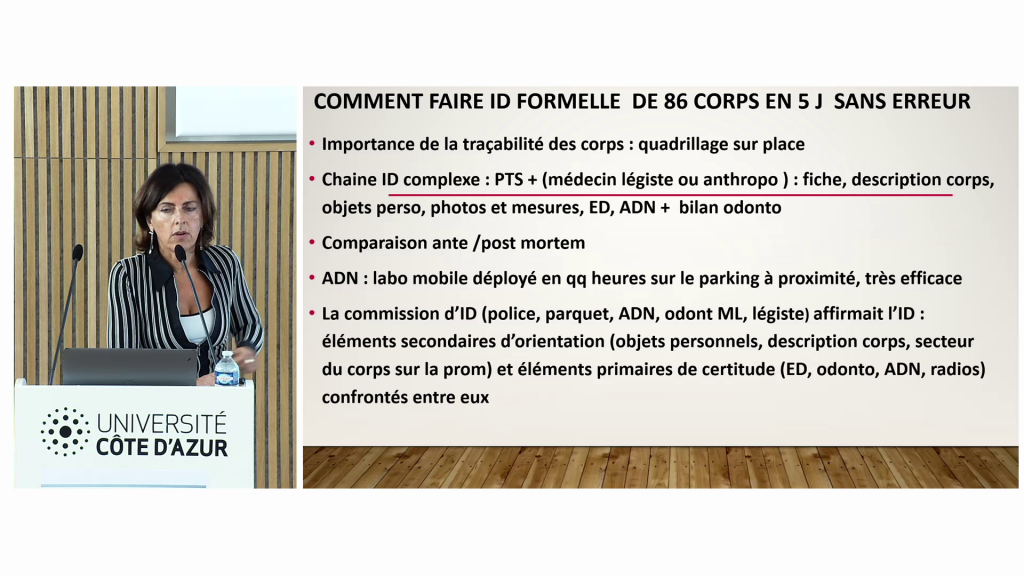
Véronique Alunni was deputy director of the Institute of Forensic Medicine at Nice University Hospital at the time of the 14 July attacks. At the request of the anti-terrorism prosecutor’s office, she had to identify 86 victims and determine the causes of their deaths within five days. She recounts: “One of the most beautiful things we experienced during this attack was the mutual aid because a huge number of people from all over France came to Nice to help us perform the autopsies. Doctors, secretaries. And, for the first time in France and perhaps in the world, we even enlisted medical students to participate. “ The identification process is complex. Relations with families, the justice system and the media are not always easy.
Véronique Alunni concludes by emphasising that forensic medicine and the justice system must evolve together. The partnership between forensic scientists and public prosecutors is essential, and we must move forward with the evolution of society. Because each attack ultimately reveals new issues that must be addressed to respect both the suffering of families and the needs of society.
On training in war surgery, Damien Massalou, university lecturer and hospital practitioner in visceral and digestive surgery at the Université Côte d’Azur and Nice University Hospital.
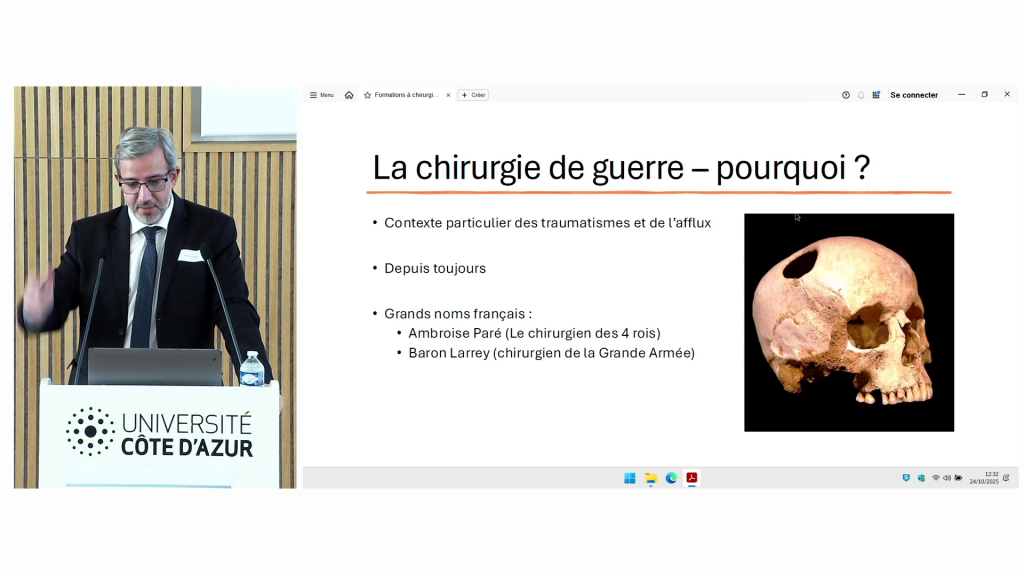
The war surgeon is a multifunctional surgeon, explains Damien Massalou. In our current civilian practice, surgeons’ training is highly specialised. Additional training courses are therefore being set up to broaden the training of already qualified doctors and surgeons and enable them to intervene in emergency situations. He concludes his presentation on war medicine with a quote from Pasteur: “We do not ask an unfortunate person what country or religion they belong to, we say to them: you are suffering, that is enough, you belong to me, I will relieve your pain.”
Interventions on the afternoon of 24 October
Professor José Luis Prieto (SP), forensic scientist
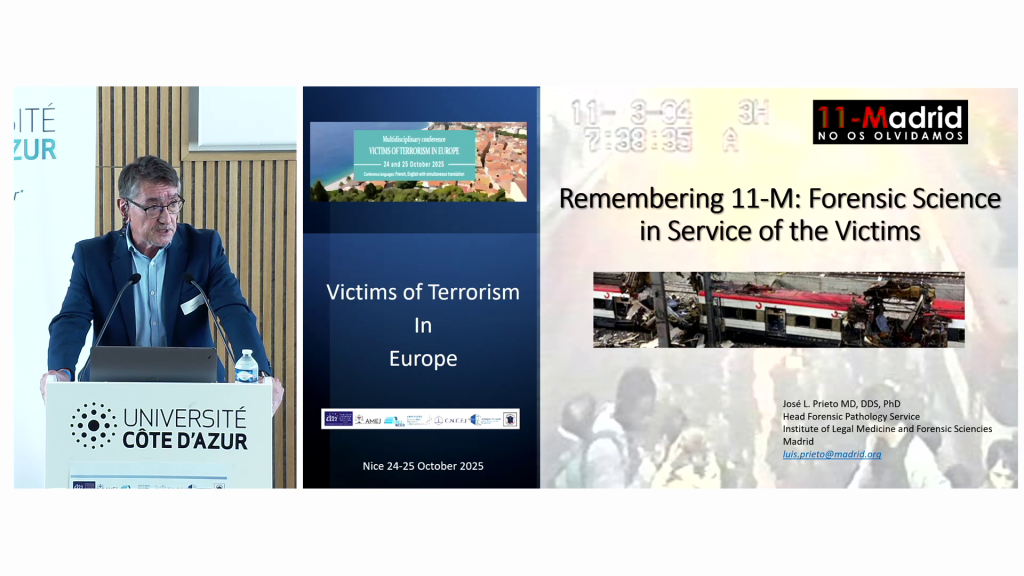
Professor Prieto shares his experiences of the terrorist attacks of 11 March 2004 in Madrid, the worst terrorist attack in Spanish history, with 191 dead and more than 1,800 injured in the explosion of a dozen bombs on four commuter trains. He explains the difficulties involved in identifying the 191 people who died, given the legitimate expectations of their families. He outlines the action plans put in place in Spain since 2004, emphasising the importance of coordination between the various services responsible in the event of an emergency.
Round table discussion on the expertise of attack victims
Workshop led by Thierry Wanet (BE), with the participation of Anthony Schena (BE), psychiatrist, Anne Martinat Sainte-Beuve (FR), forensic pathologist, Alain Miras (FR), Medical Director of the Victims’ Guarantee Fund, doctor.
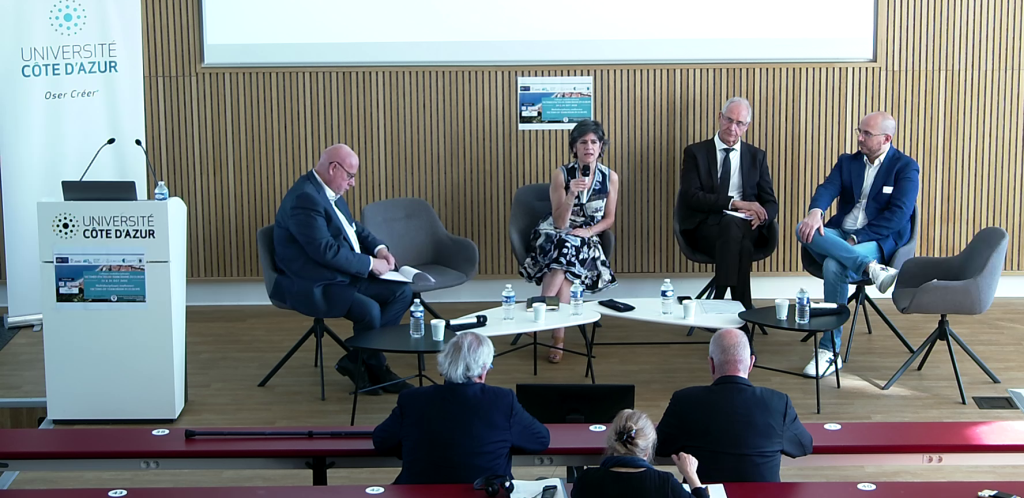
This round table addressed issues raised by the expertise of attack victims. Is there anything specific about the care of victims of terrorist attacks? Are the injuries different from those caused by major multiple trauma? How can they be assessed? What are the specific characteristics of somatic, psychological or psychiatric injuries? It was a rich debate that highlighted the difficulty of objectifying trauma and left many questions unanswered.
Workshop on protecting the right to privacy
How can the need for security be reconciled with the imperative to protect fundamental rights? How can technological innovation and human rights coexist? The control and accountability of surveillance technologies were at the heart of the debates. What is the purpose of video protection and video surveillance? Do camera systems in public spaces really provide a solution to security issues? Are the legal restrictions on the use of AI in image analysis justified or excessive?
Workshop led by Emanuella Vitello, counsellor at the Court of Appeal of L’Aquila in Italy and, until 2023, Italian magistrate seconded to the ECHR, Italy, with the participation of:
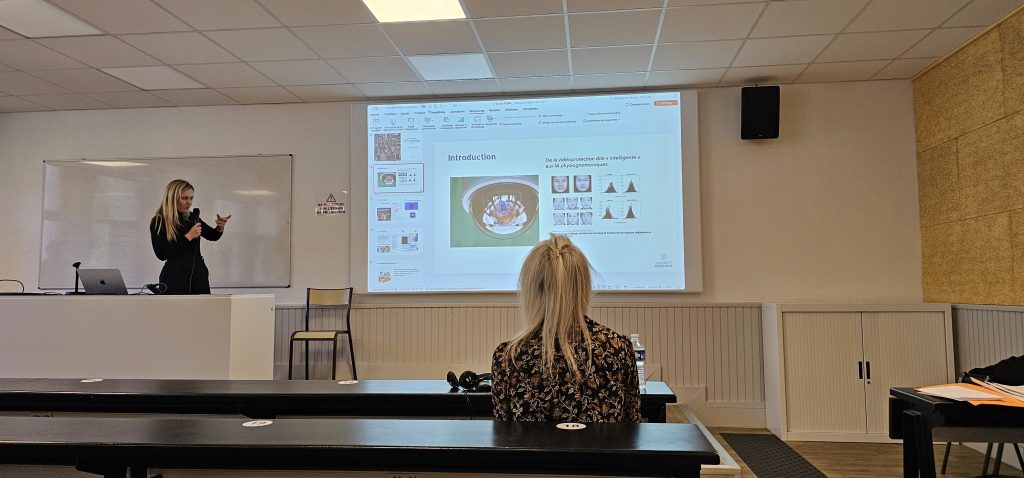
– Elisabeth Sellos-Cartel, from the Ministry of the Interior, Head of the Video Protection and Electronic Security Office, Directorate of Security Companies and Partnerships (DEPSA), Secretary General of the Steering Committee for the Experimentation of Article 10 of the JOP Law
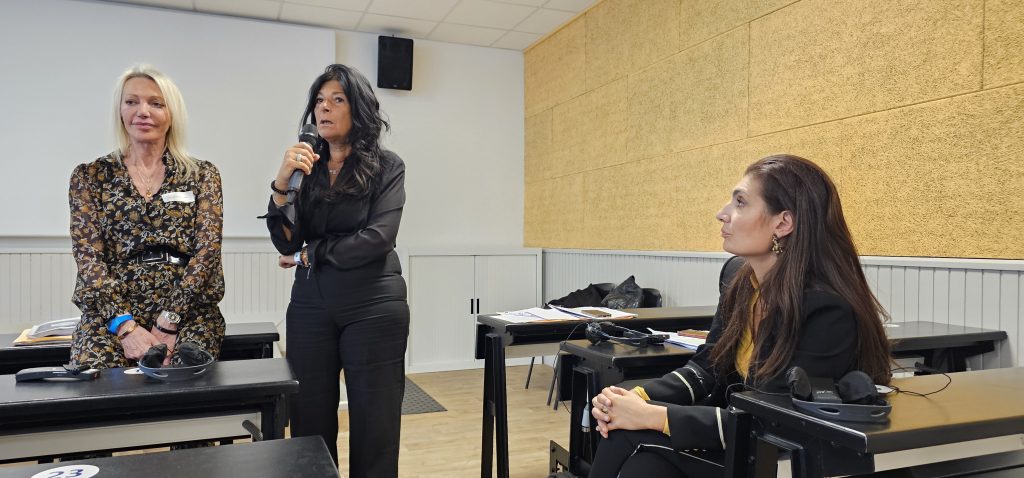
– Anne-Marie Atlan, Deputy Director of Information Systems, Nice
Metropolitan Area – Caroline Lequesne, Senior Lecturer in Public Law (HDR), Université Côte d’Azur, France
Interventions on the morning of 25 October
Nathalie Faussat, Victims’ Compensation Fund (FR), Director
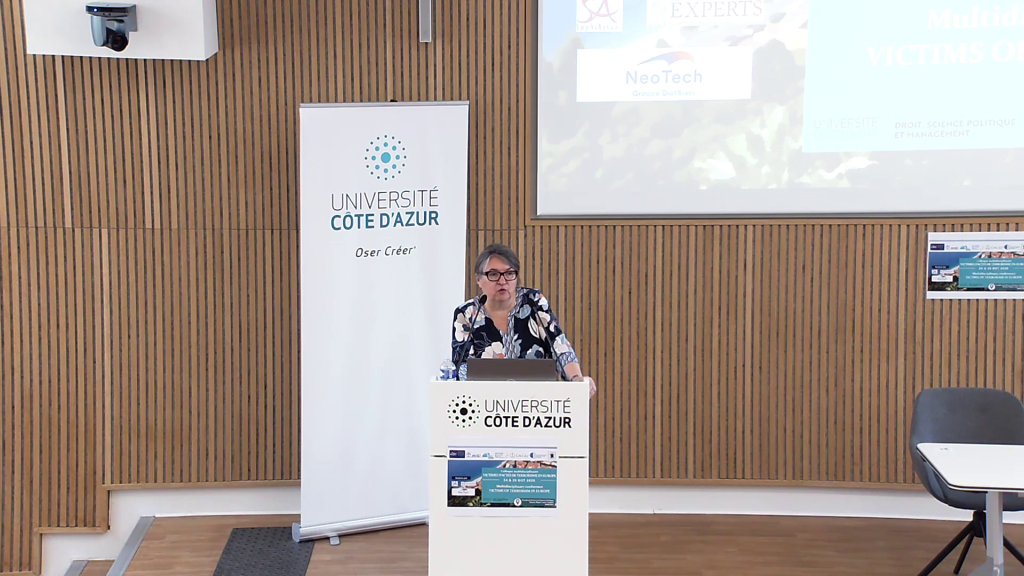
Nathalie Faussat explained how the Guarantee Fund for Victims of Terrorism and Other Offences (FGTI) works, a scheme that is unique in Europe. Based on the model used for compensation for traffic accidents, it is financed by a levy on insurance contracts and is based on national solidarity. It aims to provide full compensation for physical injury, without means testing, for the most serious offences.
Valérie Gérard, Solicitor at the Dinand Bar (BE), solicitor for Life4Brussels, an AISBL providing assistance to victims of terrorism
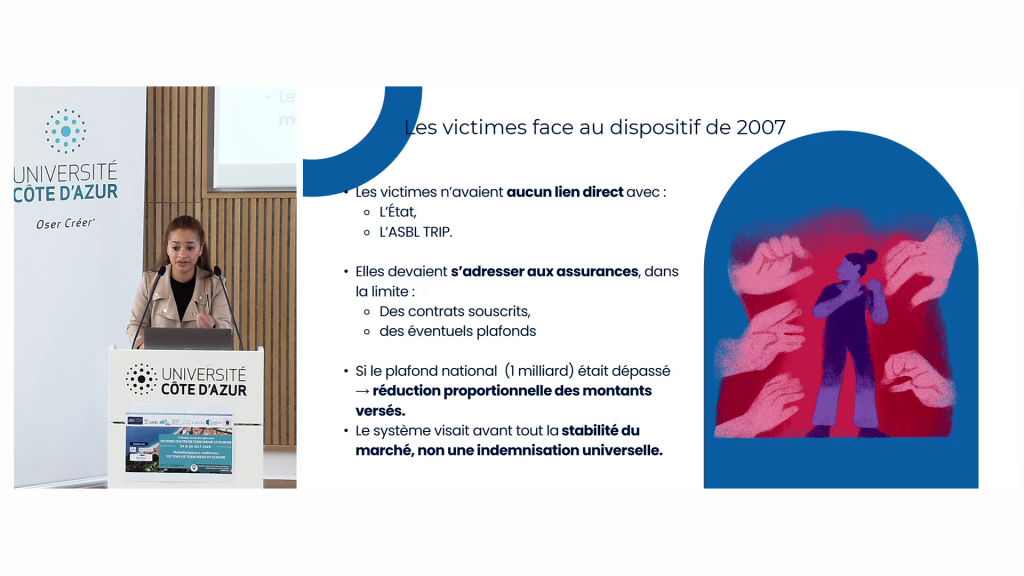
Valérie Gérard presented the Belgian model for compensating victims of terrorism, based on the law of 3 May 2024, which filled a legal vacuum and enabled compensation for all victims, regardless of the method or location of the attack.
Juliette Lançon, magistrate, European and international affairs adviser to the DIAV, Interministerial Delegation for Victim Support – Ministry of Justice
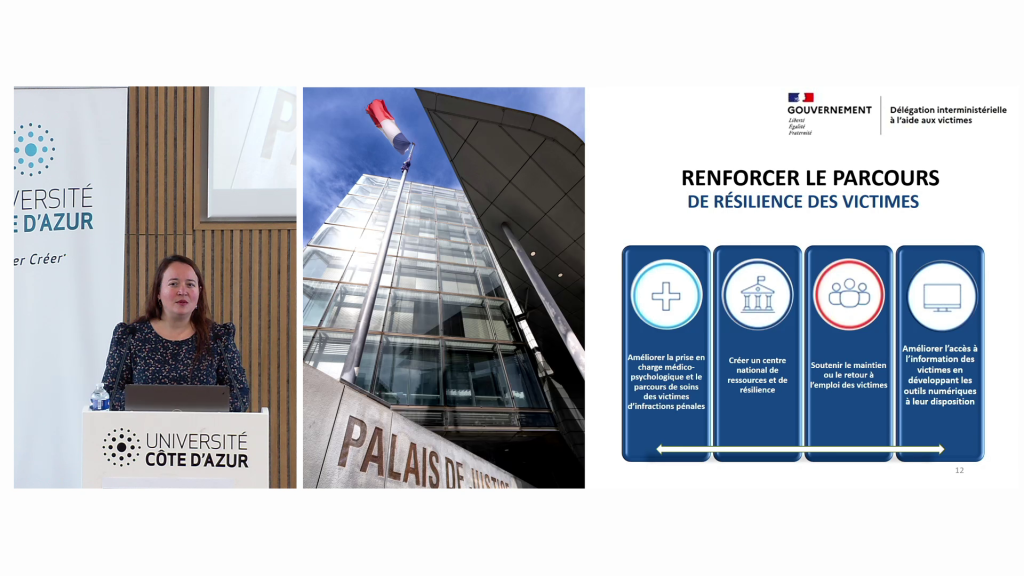
Juliette Lançon explained to us the role of DIAV, created in 2017 to support victims of terrorism.
Savinien Grignon Dumoulin, Advocate General of the Second Civil Chamber, Court of Cassation
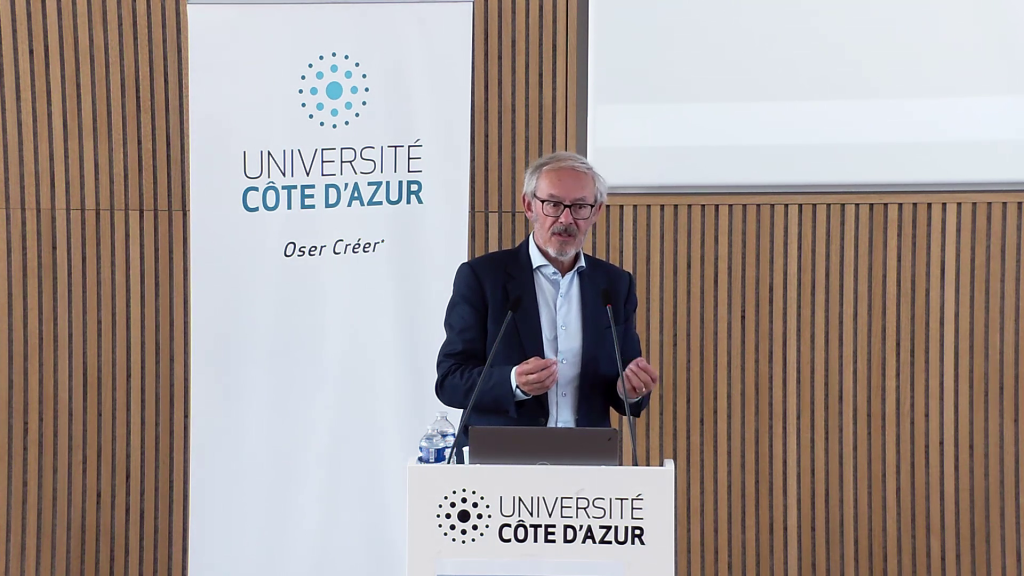
Savinien Grignon Dumoulin explained the legal remedies available to victims of terrorist acts, both in civil and criminal law. He presented the role and powers of the JIVAT, the Judge for the Compensation of Victims of Terrorist Acts (created by a 2019 law). The discussion with the audience and the morning’s speakers highlighted the difficulty of defining the status of victim of terrorism and assessing damages.
Workshop on intervention and exposure for first responders
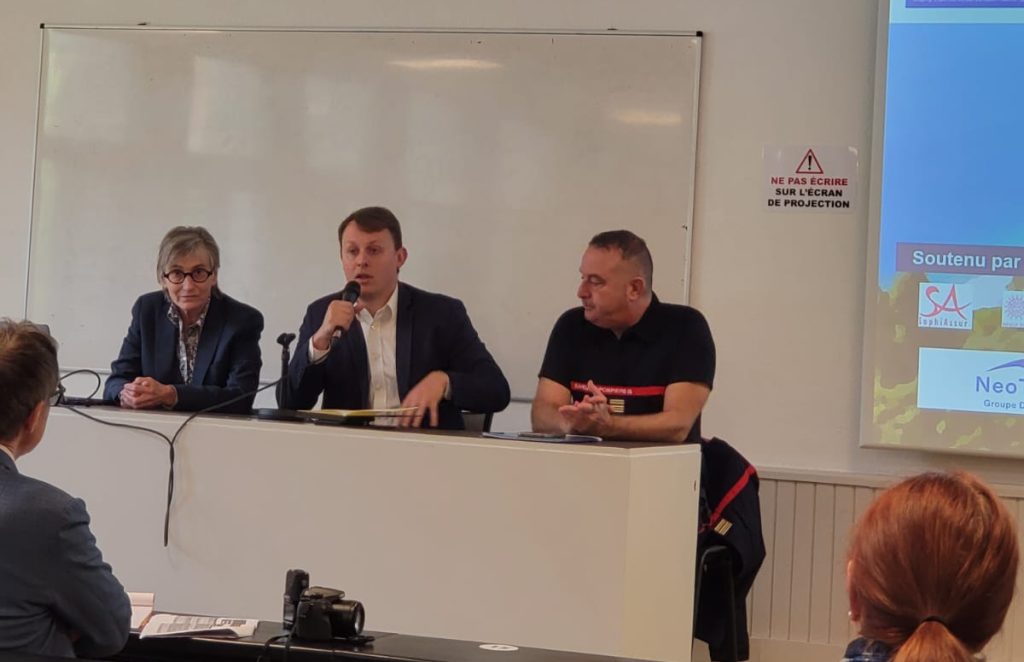
Workshop led by Alexandre Rodde, researcher specialising in terrorism and mass killings, with the participation of Ingrid Sanders, from the Halle-Vilvoorde Federal Judicial Police, Brussels Airport site, Belgium, and Lieutenant Colonel Riquier from the Alpes Maritimes Fire and Rescue Service.
Interventions on 25/10 afternoon
Victims’ associations
Hager Ben Aouissi – President of the association “Une voie des enfants” (A Way for Children), created after the attack on 14 July 2016. She herself was a victim, physically injured in the Nice attack, and is the mother of a child who was also a victim of this terrible tragedy. The association aims to address the many difficulties faced by child victims, including the invisible wounds of psychological trauma.
Nathalie Farneti, social worker, head of the solidarity division at the National Office for Veterans and War Victims
Nathalie Farneti explained to us the role of the National Office for Veterans and War Victims in recognising, showing solidarity with and commemorating those who have served France, including veterans, war victims, military personnel, wounded soldiers and war pensioners.
Patrick Prigent, chairman of the Life For Nice association.
It was with great emotion that Patrick Prigent presented the work of Life for Noce. This association provides psychological, social and legal support and assistance to direct and indirect victims of the traumatic events of 14 July 2016.
The road to recovery is long, complex and often difficult for each of the victims of the attack whom we support to the best of our ability, in particular thanks to the various specialists and experts who lead the workshops we organise, trying to meet the needs of each individual according to their own pace and stage of recovery.
Presentation of Eurojust by Hilde Vandervoorde, Federal Magistrate, National Member for Belgium
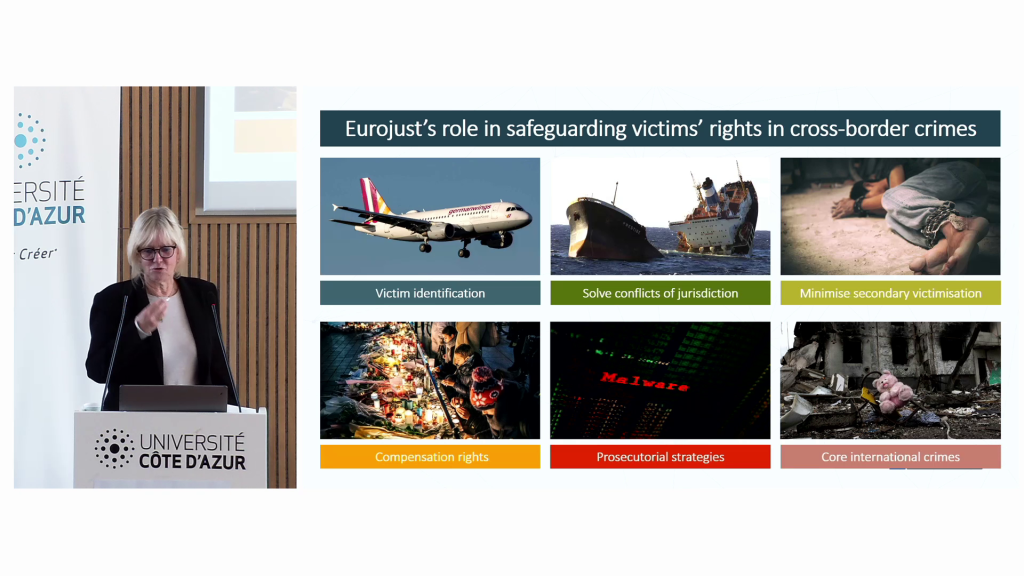
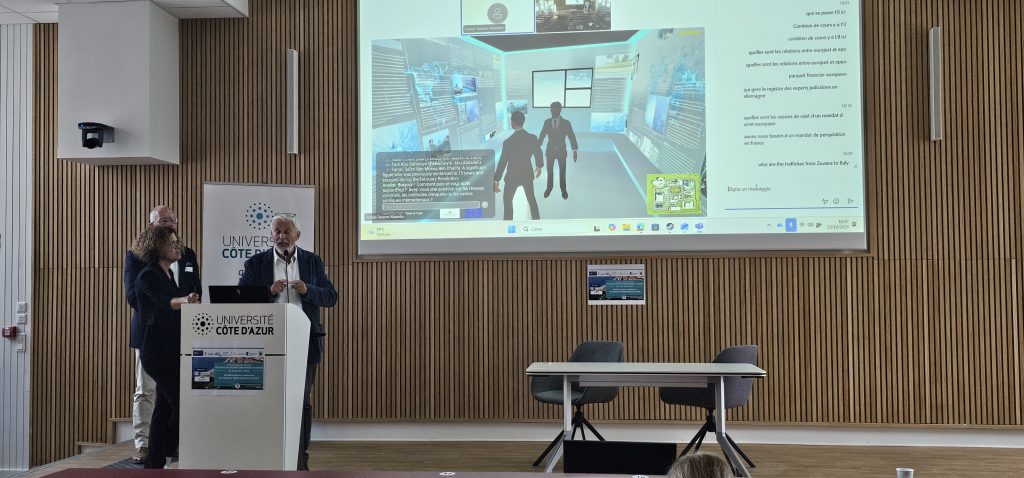
Presentation of the European VR-digijust project, by Sergio Bianchi



 Français